

The star has donated the entirety of his £25,000 Mercury Prize winnings to the MVT, which operates to save the Britain's small concert spaces.
The star was presented with the cheque on 16 October as his third album People Watching was named the top album of the past year.
He has decided to donate the funds to the MVT, in appreciation of the vital role small stages had in his early career.
"I would not have achieved my current career if it wasn't for all the performances I did around the area, and further afield, when I was just getting going," remarked the artist. "These spaces are renowned, but they are in difficulty."
Beginning in 2023, over 150 of these venues have ceased operations – about 16% of the total UK scene.
In the last year, well-known musicians including the band Pulp, Coldplay, Katy Perry and Ed Sheeran have all aided the Music Venues Trust in its initiatives to keep the scene afloat, by including a minor surcharge to their ticket prices, which benefits smaller concert halls.
He also joined in, generating more than £100,000 on his recent tour to assist 38 grassroots venues across the UK.
The money assisted locations that were facing imminent closure due to issues arising from floods, fires and personal losses, as well as permit problems, court cases and neighbor objections.
Additional spaces obtained financial assistance in improving amenities and sound and lighting systems that directly benefitted artists and concertgoers.
"The notion that money from shows in big venues backs the smaller venues, where it begins for performers like me, is just common sense," Fender has commented.
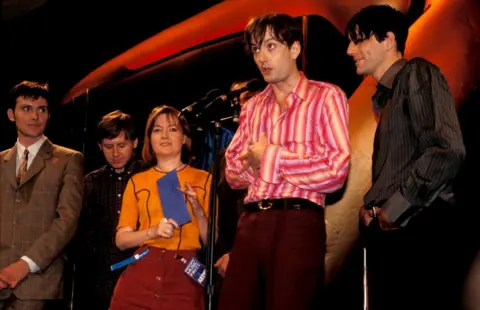
He is not the first artist to donate his Mercury Prize funds to charitable organizations.
Back when the band earned the trophy in 1996 for their record the album, lead singer Jarvis Cocker announced that the act would donate their prize money to the charity War Child.
During 2002, artist she divided her bounty across several charities, such as the NSPCC and a charity for Sickle Cell.
"And I donated a grand to Highgate Newtown, to their gymnastics program, because I did gymnastics when I was a child and they required better apparatus," the artist explained to the media.
Two years ago, the band contributed their prize money to the youth organization that supported their group, in addition to other independent music bodies.
Additionally the 1994 recipients they contributed their prize to a MS organization after a acquaintance was found to have the disease.
"The victory was quite enough," said artist Heather Small. "The money was the extra but we didn't require the bonus, because we had the main prize. So our victory touched the lives of others."
Last week, the trust shared it had saved a couple of small stages in the South East, by bringing them into public stewardship.
One venue in the city and the other in the city were purchased under the public acquisition scheme, which is backed by Arts Council England and enthusiasts who acquire "ownership units" in the buildings.

